
Teleportation via Quantum Entanglement Reassignment
Introduction
Teleportation is usually imagined as instant travel of objects from one place to another, a staple of science fiction. In modern physics, quantum teleportation is a real phenomenon but it transfers only information (the quantum state of a particle) rather than the particle itself[1]. This protocol uses a pair of entangled particles shared between sender and receiver, plus a classical communication channel[1]. Because a classical signal is needed to complete the process, conventional quantum teleportation cannot exceed light speed and does not literally transport matter[2]. Here I propose a theoretical framework in which quantum entanglement is directly manipulated to relocate physical mass. The key insight is drawn from emerging physics conjectures that space-time itself may be an emergent property of quantum entanglement[3]. If reality and space-time are fundamentally built by entanglement, then by reversing and reassigning entanglement correlations, one might effectively “collapse” space-time separation and transfer objects to distant locations instantaneously.
Recent theoretical developments support the notion of an intimate link between entanglement and space-time geometry. The ER=EPR conjecture, proposed by Maldacena and Susskind, posits that two entangled particles are connected by a microscopic wormhole (Einstein-Rosen bridge) in space-time[4]. In other words, quantum entanglement (the EPR pair) is conjectured to be equivalent to a wormhole (ER bridge) connecting those particles[4]. Subsequent work has shown, for example, that if two black holes are maximally entangled and then separated, the result is a tiny wormhole linking them[5]. While such wormholes are not classically traversable, they hint that reconfiguring entanglement could reconfigure connectivity in space-time. My proposal builds on this idea. By deliberately altering which particles are entangled with which (i.e. reassigning entanglement partners), I aim to create a controllable space-time shortcut that moves an object from one location to another. In effect, I imagine opening a transient wormhole-like channel by engineering the entanglement pattern of the object with distant matter.
In the following, I outline the scientific background and a possible mechanism for entanglement-mediated teleportation of matter. I frame the discussion in the language of quantum information and relativity, with supporting mathematics where appropriate. The approach requires: (1) Reversing or removing the object's existing entanglement with its local environment (to free it from its current space-time context), and (2) Reassigning its entanglement to a target system at the desired destination. I discuss how this could collapse the effective distance between object and target, essentially making them one system despite spatial separation, and allowing the object's quantum state – or the object itself – to be transferred.
While highly speculative, this concept is grounded in known physics of entanglement and leverages well-established phenomena like quantum teleportation[6] and entanglement swapping[7]. I also address the theoretical challenges and the consistency with existing no-faster-than-light constraints. If future technology proves capable of manipulating entanglement on macroscopic scales, such entanglement-enabled teleportation would validate the visionary idea that space-time can be transcended by quantum means – an idea that this proposal encapsulates ahead of its time.
Background: Quantum Entanglement and Teleportation
Quantum entanglement is a phenomenon where particles share a joint quantum state such that measurements on one instantly affect the state of the other, no matter the distance between them[8][9]. For example, two qubits (A and B) can be prepared in an entangled Bell state like:
|Φ⁺⟩_AB = 1/√2 ( |0⟩_A ⊗ |0⟩_B + |1⟩_A ⊗ |1⟩_B )which is a superposition where A and B are perfectly correlated. Neither qubit has a definite state on its own (each is indeterminate), but if one is measured, the other is instantly found in the corresponding state. This non-classical correlation underlies what Einstein called “spooky action at a distance.” Importantly, entanglement by itself cannot send usable information faster than light (no-communication theorem)[10], but it provides powerful quantum channels for information transfer when used alongside classical communication.
Quantum teleportation is a prime example: it uses entanglement to transmit an unknown quantum state from a sender (Alice) to a receiver (Bob) without moving the physical carrier of that state[1]. The standard protocol (Bennett et al., 1993) involves three particles: Alice has the particle whose state |ψ⟩ is to be teleported, plus one particle of an entangled pair; Bob has the other entangled particle[11]. Alice performs a joint measurement on her particle and her entangled particle (a Bell state measurement), which projects them onto an entangled basis[12][6]. This measurement “entangles” the two and, in the process, collapses (destroys) the original particle's state locally while instantly transferring the influence of that state onto Bob's particle via the entanglement link[6].
Alice's measurement yields two classical bits of information (identifying which Bell state was obtained). She then sends those two bits to Bob over a regular classical channel[6]. Upon receiving this, Bob applies a corresponding unitary operation on his particle to recover the state |ψ⟩. Remarkably, Bob's particle now possesses the exact quantum state originally held by Alice's particle, even if they were far apart. The original particle is left in a random (destroyed) state due to the measurement, so no cloning occurs[13]. The end effect is teleportation of the quantum state |ψ⟩ from Alice to Bob[6].
Ideal teleportation process:
|ψ⟩_A ⊗ |Φ⁺⟩_BC → |Φ⁺_AB⟩ ⊗ |ψ⟩_C(up to known Pauli rotations on C conditioned on Alice's measurement outcome)
Here |Φ⁺_AB⟩ denotes an entangled Bell state of Alice's two qubits after measurement, and the remaining qubit C (with Bob) collapses into the state |ψ⟩ originally at A. The classical communication ensures Bob knows which correction to apply, preserving causality[10].
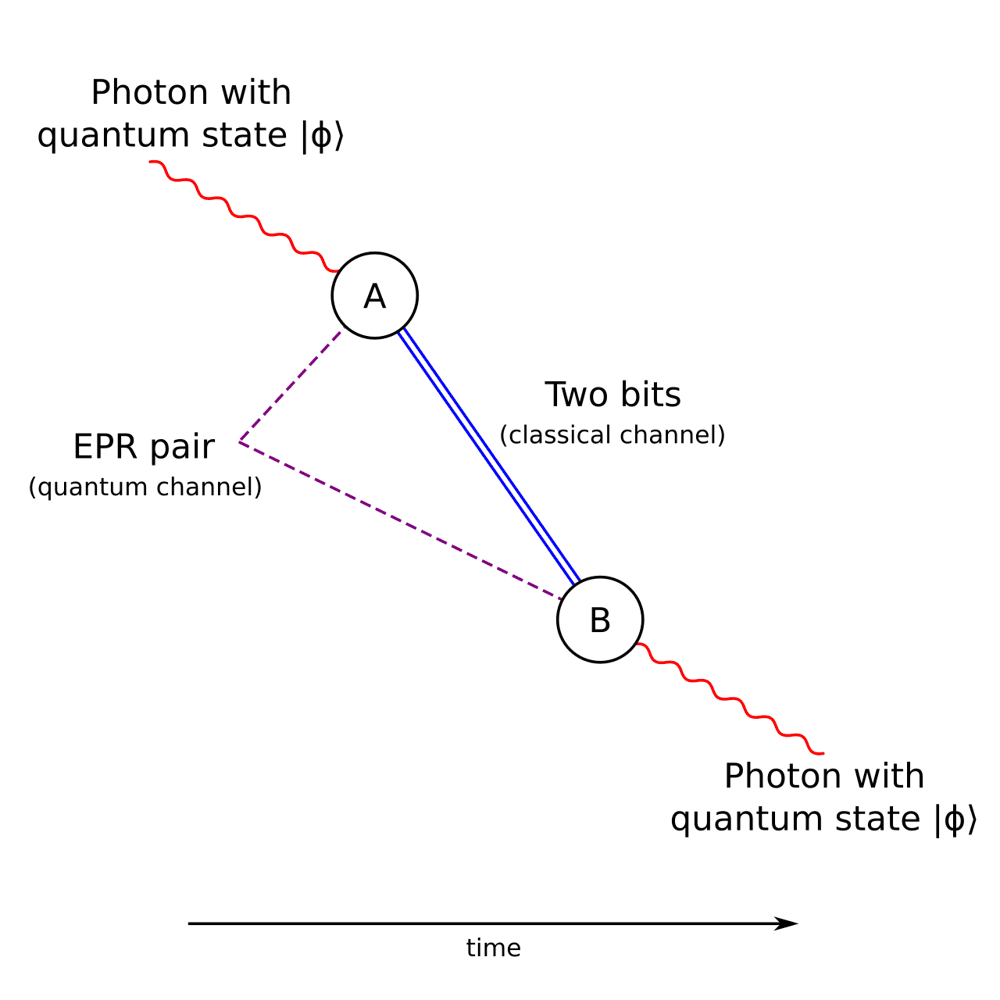
Figure 1: Standard Quantum Teleportation Protocol
Diagram of the standard quantum teleportation protocol. An unknown qubit state |φ⟩ at Alice's side is destroyed after a joint Bell-state measurement with one qubit of an entangled pair. The measurement outcome (2 classical bits) is sent to Bob, who then applies a conditional operation to his qubit (the other member of the entangled pair) to obtain |φ⟩. This protocol transfers the quantum information of the particle without moving the particle itself[1].
Entanglement Swapping
A related concept is entanglement swapping, which allows entanglement to be reassigned between particles that never interacted[12][7]. For instance, suppose there are two independent entangled pairs: particles (A, B) share one Bell state and particles (C, D) share another. If a joint Bell measurement is performed on one particle from each pair (say B and C), those two will lose their original entanglement, but the unmeasured particles A and D become entangled, even though A and D have never met[12]. In essence, the entanglement has been swapped to a new pairing (A–D). Entanglement swapping is effectively quantum teleportation of an entangled state[6]. It is a crucial technique for quantum networks and repeaters, enabling entanglement distribution over long distances by chaining together shorter entangled links[15].
The ideas above are well-established experimentally for photons, atoms, and other small systems – for example, quantum teleportation has been achieved over 1,400 km using satellite-linked photons[16]. However, teleportation of a macroscopic object (i.e. moving matter itself) remains far beyond current capability. The fundamental challenges include: capturing the full quantum state of a large object (which consists of astronomically many particles and degrees of freedom), maintaining coherent entanglement of that object with a distant system, and avoiding decoherence (loss of quantum information to the environment).
My proposal addresses these by leveraging an extreme view: that an object's existence at a location is tied to its entanglement with that location's environment. By severing those entanglement ties and re-linking the object with a new environment elsewhere, the object could be made to disappear from the original location and reappear at the new location. In other words, instead of laboriously transmitting all the quantum bits of an object, I attempt to exploit the hypothesized identity of entanglement and spatial connection to directly reposition the object via the geometry of entanglement.
Entanglement as the Fabric of Space-Time
A guiding hypothesis for my teleportation proposal is that quantum entanglement literally holds space-time together. In recent theoretical physics, there is growing evidence that the geometry of space – the distances and connections between regions – may emerge from the pattern of entanglement in an underlying quantum state[3][17]. Removing entanglement can increase distance and even separate space-time regions, while adding entanglement brings regions closer or connects them.
Van Raamsdonk (2010) demonstrated this in toy models of quantum gravity: if two regions of space (in a dual gravity description) have their degrees of freedom gradually disentangled, the geometric distance between them increases and eventually they split into two disconnected universes[18][17]. Conversely, entangling two initially separate systems can merge them into a single connected space.
“The emergence of classically connected spacetimes is intimately related to the quantum entanglement of degrees of freedom... Disentangling the degrees of freedom associated with two regions of spacetime results in these regions pulling apart and pinching off from each other.”
— Van Raamsdonk, 2010[3]
In short, entanglement = connectivity.
One dramatic expression of this idea is the ER=EPR conjecture[4]. ER=EPR suggests that a pair of maximally entangled black holes would be connected by an Einstein-Rosen (ER) bridge – a wormhole – even though they might be spatially separated by light-years[4]. This wormhole is a geometric representation of the entanglement (nicknamed EPR after Einstein-Podolsky-Rosen). Although the wormhole in that scenario is non-traversable (no signal can pass directly through it without quantum trickery), it provides a powerful conceptual link between entanglement and a “shortcut” in space-time. Karch and Jensen (2013) showed in a holographic context that the physical properties of a wormhole are equivalent to those of two entangled black holes[5]. They note that even if the black holes are moved far apart, the wormhole continues to connect them[5] – distance in the external space becomes irrelevant to the entangled pair, as if the entanglement collapses that distance in the hidden geometry. This is exactly the kind of effect I want to harness: by creating an entanglement bridge between two distant locations, an object might circumvent traveling through normal space and instead slip through an emergent wormhole-like connection.
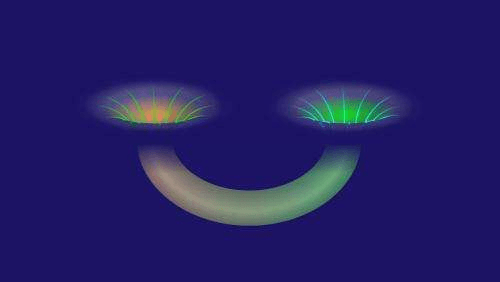
Figure 2: Entanglement–Space-Time Connection
Two black holes that are entangled (forming an EPR pair) behave as if a tiny wormhole (ER bridge) links them. Even when pulled far apart in ordinary space, the entanglement keeps them connected via a hidden geometric tunnel[5]. This visual metaphor, proposed by Maldacena & Susskind, suggests that rearranging entanglement is equivalent to reshaping space-time geometry. In my proposal, I imagine creating a similar bridge (not necessarily involving black holes) between two locations to teleport an object through it.
Furthermore, recent studies have made the ER=EPR idea operational. Susskind and colleagues showed that a quantum teleportation protocol can be viewed as information actually traveling through a wormhole[19]. When the necessary conditions are met (essentially when the entangled pair is used in a certain way), the wormhole can become traversable. In their scenario, a qubit thrown into one black hole of an entangled pair can emerge out of the other black hole – effectively the qubit travels through the wormhole and appears on the other side[19].
“ER=EPR allows us to think of quantum teleportation as communication of quantum information through space-time wormholes connecting entangled systems. The conditions for teleportation render the wormhole traversable so that a quantum system entering one end of the [bridge] will, after a suitable time, appear at the other end.”
— Susskind et al.[19]
This remarkable picture blurs the line between teleportation (transfer of state) and actual physical travel – they become two descriptions of the same underlying event. If the wormhole is truly traversable, one could say the particle itself took a shortcut through space-time.
These insights guide my proposal. I hypothesize that an object can be delocalized from its current position by manipulating its entanglement relations, then relocalized at a distant position by establishing new entanglement there. Essentially, I want to perform a macroscopic entanglement swapping, where the object initially entangled with its original surroundings becomes entangled with a distant set of particles instead. If entanglement defines space-time attachment, this swap should detach the object from its original space and attach it to the new space, in effect moving it.
Proposed Mechanism for Entanglement-Mediated Teleportation
1Isolate and “Disentangle” the Object
The first step is to reverse the object's existing entanglement with its environment. Any ordinary object is constantly interacting with ambient particles (air molecules, photons, etc.) and becomes entangled with the environment. This environmental entanglement is the essence of quantum decoherence: information about the object's quantum state “leaks” into the environment, making the object behave classically[20]. In practical terms, the object's position is heavily correlated with surrounding fields – it shares a quantum state with the nearby world such that its location is definite.
To prepare the object for teleportation, one must sever these entangling ties, putting the object into a pure, independent quantum state (at least with respect to center-of-mass position or whatever degrees of freedom are to be teleported). One might imagine placing the object in an isolated, high-vacuum, ultra-cold chamber to minimize environmental interactions, and perhaps using quantum error correction or dynamical decoupling techniques to suppress decoherence. The goal is to have the object in a state |Ψ_object⟩ that is not entangled with anything else (a well-defined wavefunction on its own).
In practice this is extremely challenging – for a macroscopic object this state might need to be something like a Bose-Einstein condensate or an otherwise coherently controllable state. I will assume, for the sake of theory, that the object can be prepared in such an isolated quantum state. This is conceptually the reverse of entangling – it is disentangling the object from its original context. By doing so, one has in a sense freed the object from the local space-time, since according to my hypothesis that space-time is an emergent network of entanglement, the object is now less “glued” to here.
2Create an Entangled Bridge to the Destination
Next, the object must be entangled with the target location. The target could be a device or chamber at another location (potentially light-years away). There must be some way to produce a strong entanglement between a degree of freedom of the object and some degrees of freedom at the destination. This could be done in stages.
One approach is to use an intermediary pair of particles (or fields) that are themselves entangled and distributed: for example, a particle (or quantum field mode) B that is brought into contact with the object A, and another particle C that is physically at the destination. B and C are prepared beforehand in an entangled state (let's say B and C share a Bell state). Then B is introduced to interact with A such that A becomes entangled with B. Through this interaction, some of the object's state |Ψ_object⟩_A gets imprinted onto the entanglement between A and B.
Now A-B-C altogether are in an entangled state that connects the object to the distant particle C. At this point, a suitable entanglement swapping operation is performed: B (which is entangled with both A and C) is measured in an appropriate joint basis that swaps the entanglement, leaving A and C entangled while collapsing B's state[12][14]. After this reassignment of entanglement, the object A (or specifically its quantum state) and the remote particle C share an entangled state, correlating A with the distant location.
It is worth noting an alternative viewpoint: rather than explicitly doing a swapping protocol, one could envision directly entangling the object with the distant location (for example, via quantum fields that extend between the locations, or using pre-entangled ancillae spread at both sites from the start). The end result needed is the same: the object is now nonlocally correlated with something at the destination and less correlated with anything at the origin.
3Collapse Space-Time Separation (Teleportation Event)
Once the object and the destination share the necessary entanglement, the actual “teleportation” by exploiting the entanglement to transfer the object's state – or existence – to the other side. In the language of quantum information, this would be a standard quantum teleportation of the object's quantum state to the destination's matter (like teleporting the quantum state into a bunch of atoms that then become the object). However, in the ER=EPR picture, something more physical might happen: the entangled connection effectively forms a channel (a microscopic wormhole) through which the object can pass.
In the more exotic wormhole interpretation, if the entanglement between object and destination is sufficiently prepared, one could imagine that performing the joint measurement (or otherwise activating the protocol) renders the wormhole traversable[19]. The object might then literally travel through the geometric shortcut – for example, if the object were a bunch of particles, they might fall into one end of the entanglement wormhole and emerge from the other end. In Susskind's scenario for entangled black holes, an object thrown into one black hole came out of the other without needing separate classical signals to reconstruct it[21].
Analogously, my hope is to engineer a situation where initiating the teleportation causes the object to disappear from the sending chamber and appear intact in the receiving chamber, as if stepping through a portal. I do not claim to break relativity; rather, in a complete theory, the traversal of the wormhole will be self-consistent and not allow causal paradoxes. But from a practical standpoint, it effectively relocates the object much faster than sending it through normal space.
Technical Flow Summary
Prepare object A in a pure state decoupled from environment (state |ψ⟩_A).
Prepare a large entangled resource connecting origin and destination. For simplicity, consider one qubit B near A and one qubit C at destination in an entangled pair |Φ⁺⟩_BC.
Perform an operation that entangles A with B (so that some information of A is now encoded in correlations between A and B).
Do a Bell-state measurement on the pair (A, B), collapsing A and B into an entangled basis. This measurement simultaneously teleports A's state to C (because B was entangled with C).
Concretely, if |ψ⟩_A = α|0⟩ + β|1⟩, the combined initial state can be written as:
Bell-basis expansion of the combined state:
|ψ⟩_A ⊗ |Φ⁺⟩_BC = ½ [
|Φ⁺_AB⟩ ( α|0⟩_C + β|1⟩_C )
+ |Φ⁻_AB⟩ ( α|0⟩_C − β|1⟩_C )
+ |Ψ⁺_AB⟩ ( β|0⟩_C + α|1⟩_C )
+ |Ψ⁻_AB⟩ ( β|0⟩_C − α|1⟩_C )
]
Each term indicates what C's state would be, up to a known unitary (σ_z, σ_x, etc.), if AB collapse to that Bell state. Upon measurement, one of these terms is realized, and the result (two classical bits identifying which Bell state) is sent to the destination. Bob (at C) then applies the appropriate Pauli rotation to convert C's state to α|0⟩ + β|1⟩ = |ψ⟩_C[6].
At this point, the quantum state originally in object A is now in system C at the destination, and A's original state is gone (it has become an undefined mixture due to measurement). If |ψ⟩ encoded the complete physical state of the object, then effectively the object has been reconstituted at C and lost at A.
The novelty in my proposal is the interpretation that during this process, space-time itself is manipulated. By disentangling the object from its original location and re-entangling it with a new location, I propose that the object's position in space becomes indeterminate and then collapses to the new location. The intermediate entangled state (object plus distant system) can be viewed as the object being in a superposition of here and there, or “spread” across a quantum bridge. When the final measurement is done, that superposition is resolved with the object materializing at the destination. In a very real sense, this has collapsed the space-time separation between the object and destination by using entanglement as the connecting thread.
Feasibility, Challenges, and Considerations
This proposal is highly theoretical and faces enormous practical and conceptual challenges. I outline some key issues:
Decoherence and Scalability
Isolating a macroscopic object to maintain a coherent quantum state is extraordinarily difficult. Environmental entanglement (decoherence) acts quickly on large systems, effectively measuring them and preventing the maintenance of the delicate entangled states needed[20]. Even if one isolates an object (say, by cooling it to near zero temperature to reduce thermal interactions), the sheer number of internal degrees of freedom means the object can decohere internally.
Current quantum teleportation experiments are limited to single particles or small systems. Teleporting even a complex molecule would require exponential resources in entangled pairs and extraordinary error correction to counter decoherence. Therefore, the technology to isolate and entangle a human-scale object is far beyond the current horizon, and might require new physics.
Entanglement Distribution
Creating and distributing entanglement over large distances is an active area of research (e.g., quantum repeaters, satellite experiments)[16]. To teleport an object, one might need an entangled network spanning the origin and destination. For example, if you wanted instantaneous travel from Earth to a star, you would need to have previously generated a huge entangled resource connecting Earth and that star system.
The amount of entanglement (number of entangled particle pairs or qubits) needed would be proportional to the amount of information in the object's quantum state (which for a human-scale object is astronomically large, effectively 21030 or more quantum bits!). Without some compression or way to focus on certain degrees of freedom, the resource requirements are prohibitive.
Energy and Space-Time Constraints
In the ER=EPR picture, making a wormhole traversable typically requires negative energy or exotic states that violate energy conditions in general relativity. Gao, Jafferis, and Wall (2017) showed that a small coupling between two entangled black holes can provide the negative energy shock needed to open a tiny window for information to pass through the wormhole.
Additionally, traversable wormholes are known not to allow time travel or true superluminal signaling – there is usually a caveat that going through the wormhole is not faster than an outside light signal would be[22][23]. Thus, even if one creates a wormhole, it might take the object as long to go through it as it would for light to go the long way around. These nuances need a full general relativistic and quantum treatment to ensure no violations of known laws.
No-Cloning and Destruction of Original
A fundamental rule of quantum physics is the no-cloning theorem – one cannot make an identical copy of an unknown quantum state. This teleportation mechanism respects this: the original object's state is destroyed when it is measured or when it enters the wormhole. Thus, one cannot get two copies of the object. This is good (it means if teleportation works, it doesn't violate quantum rules), but it also means teleportation is effectively a destructive process for the original – the original as it was ceases to exist once the teleportation is done, only the teleported version remains[13].
Accuracy and Complexity
Teleporting a single qubit has been done with high fidelity. Teleporting something like even a small virus would involve trillions of trillions of qubits of information. Any slight error in those qubits would result in a mutated or damaged reconstruction. Error correction in quantum systems is possible, but at a cost of even more qubits. Without near-perfect fidelity, a teleported complex object might not survive intact.
Despite these challenges, exploring this concept is scientifically fruitful. It ties together quantum information theory, quantum gravity, and quantum matter. Progress in one area could incrementally reduce the gap. Already, there is theoretical work on using quantum entangled states to possibly simulate traversable wormholes in quantum computers[24]. One can imagine in the future, small amounts of matter (maybe electrons or atoms) might be teleported through engineered space-time wormholes as a proof of concept.
Conclusion
I have presented a speculative yet academically grounded proposal for a teleportation technology that hinges on the primacy of quantum entanglement in defining physical reality. By reversing what makes particles entangled (i.e. disentangling an object from its immediate environment) and then reassigning entanglement to connect the object with a distant target, I aim to effectively collapse the space-time separation between the two. In principle, this would allow the object to vanish from one location and appear in another without traversing the intervening space in the usual way.
The idea finds support in cutting-edge theory: if space-time emerges from entanglement connectivity[3], then controlling entanglement is equivalent to controlling spatial relations. My thought experiment is essentially an extrapolation of quantum teleportation and entanglement swapping protocols[6] to the domain of bulk matter and space-time geometry, informed by the ER=EPR insight that entanglement may be nature's conduit for “wormholes”[4][19].
Though currently far beyond technical reach, this concept is consistent with known physics in that it does not require arbitrary violation of conservation laws or relativity – it leverages them in an extreme regime. All processes abide by quantum no-cloning and causality, albeit enacted in a scenario where a causal “shortcut” is engineered through entanglement. I have highlighted the formidable challenges: maintaining macroscopic coherence, distributing massive entanglement resources, and ensuring faithful reconstruction.
In closing, I emphasize the bold vision: reality itself, in this view, is an entangled web; space and distance are secondary. If humanity learns to weave that web – to braid the strands of entanglement at will – then the old limits of distance may one day be transcended. Teleportation via quantum entanglement reassignment represents one possible weaving: a future technology where stepping across the world or even to another planet is accomplished by an entanglement handshake rather than a rocket. As speculative as it is, this proposal is firmly planted in the frontier between quantum mechanics and relativity, drawing on the best of current scientific understanding.
References
- [1]Bennett, C. H., et al. (1993). "Teleporting an Unknown Quantum State via Dual Classical and Einstein-Podolsky-Rosen Channels," Phys. Rev. Lett. 70, 1895-1899.
- [2]Van Raamsdonk, M. (2010). "Building up spacetime with quantum entanglement," Gen. Relativ. Gravit. 42, 2323-2329.
- [3]Maldacena, J. & Susskind, L. (2013). "Cool horizons for entangled black holes," Fortschr. Phys. 61, 781-811. (ER=EPR conjecture)
- [4]Jensen, K. & Karch, A. (2013). "Holographic Dual of an EPR Pair has a Wormhole," Phys. Rev. Lett. 111, 211602.
- [5]Gao, P., Jafferis, D., & Wall, A. (2017). "Traversable wormholes via a double trace deformation," Journal of High Energy Physics 2017(12): 151.
- [6]Susskind, L. & Zhao, Y. (2018). "Teleportation through the wormhole," Phys. Rev. D 98, 046016.
- [7]Horodecki, R., et al. (2009). Quantum entanglement, Rev. Mod. Phys. 81, 865. (Comprehensive review of entanglement theory)
- [8]Yu, S., et al. (2020). "Entanglement of macroscopic objects at room temperature," Science 369, 66-69.
- [9]Pan, J.-W., et al. (2017). "Satellite-based Entanglement Distribution over 1200 kilometers," Science 356, 1140-1144.